
Diamond Cut
Canadian Diamonds for Every Occasion
The Short Answer
How well a diamond is cut has everything to do with the brilliance, sparkle, & fire of a diamond.
The cut of a diamond is comprised of three elements: Proportions, Symmetry & Polish.
The term for the standard round shape is “Round Brilliant”.
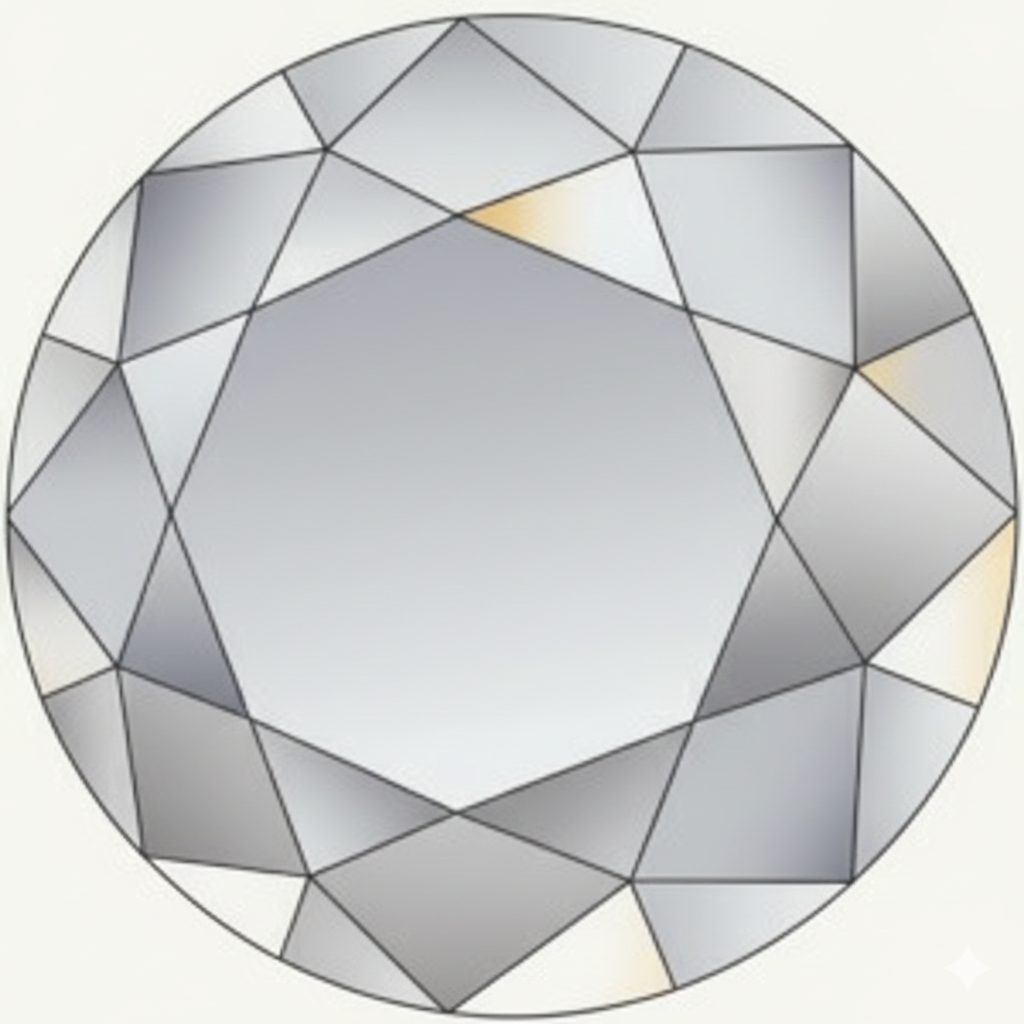
Ideal Cut means that a diamond has Ideal Proportions, Ideal Symmetry & Ideal Polish. Beware: We have found recent reports of Diamonds being called Ideal Cut, but only the proportions are Ideal. Would you call the stone below Ideal?
We have brought in thousands of diamonds for customers. Of course we specialize in Ideal Cut diamonds, but due to budget constraints, some of our customers have insisted on looking at a non-ideal cut diamond as well. Time & time again these customers almost always went with the ideal cut diamond.
The weight of a diamond is meaningless if it is not cut properly. The most attractive beauty of a diamond is its ability to refract light and change it into a prismatic display. If a diamond is cut too deep, then it will look like a brick and have a weight like a brick. And instead of looking like a 1.00ct sized diamond, the weight of the diamond will be spread out into non-helpful areas.
We strongly recommend not sacrificing the quality of the cut of a diamond. If the right sized diamond is just out of reach, then considering other options such as going with a grade down in color or clarity in order to find the right diamond.
The Long Answer
The 1st Aspect of Cut. Proportions.
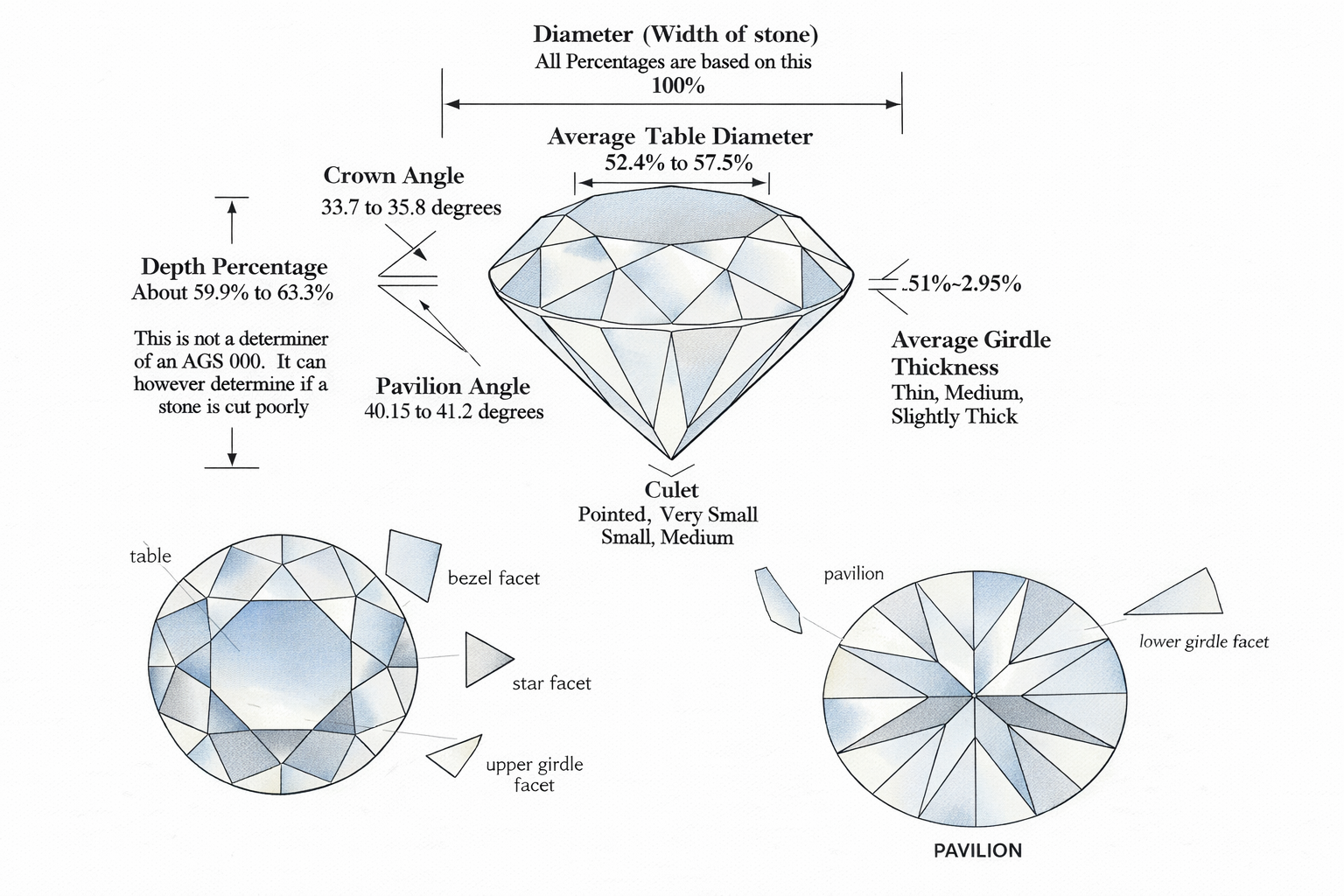
The parts of the diamond that account for the Proportions of a diamond are:
- Girdle Outline (Diameter)
- Table size
- Crown angle
- Girdle Thickness
- Pavilion angle
- Culet Size (sounds like Q-lit)
Starting with Proportions on an overall basis, let us assume that Diamond A weighs 1.00 carat, and Diamond B weighs .75ct. (100 points =1 carat). Looking at the below examples, which diamond would you want?
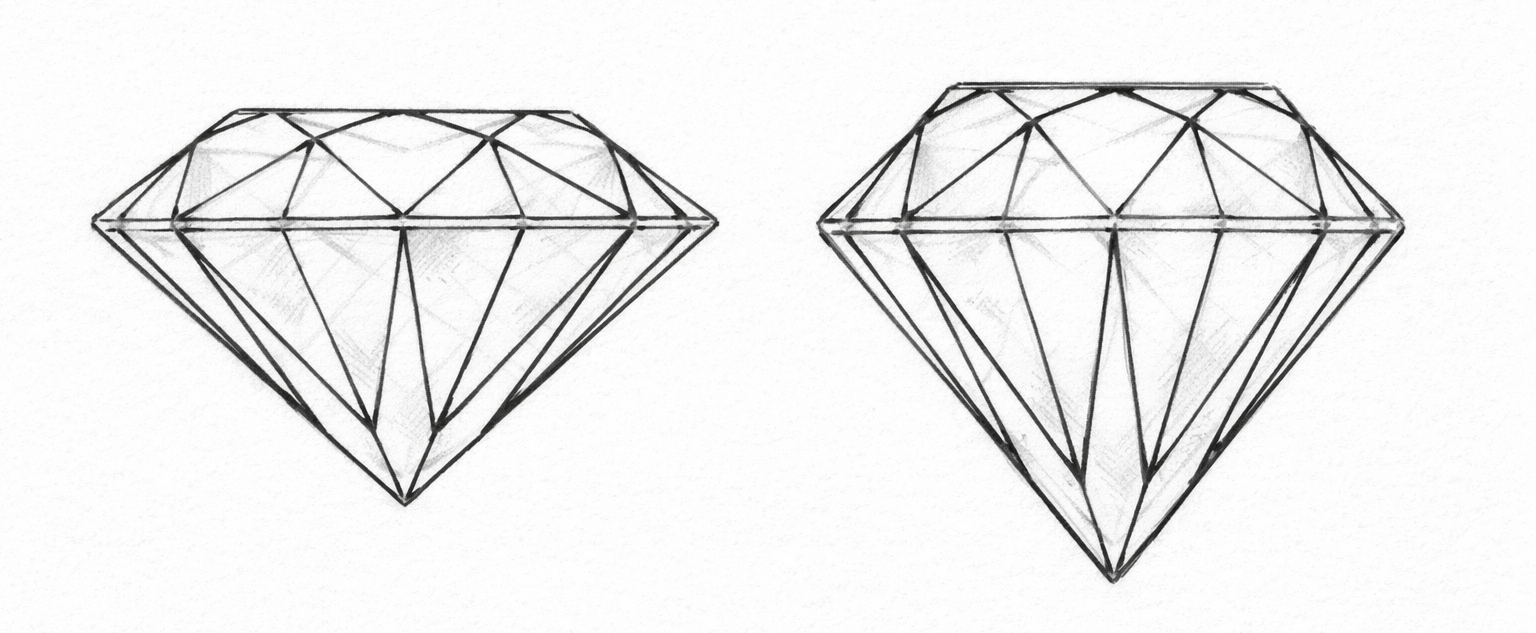
Some people might say the 1.00ct diamond, but from the top, both diamonds spread out to the same dimensions. Well, if Diamond A were cut to ideal dimensions that particular diamond would weigh .75ct. So what’s the big deal about that? Could it be that you received a great value for that diamond and get to tell everyone that it is 1.00ct? Well, take a look at the below representations of what happens when light enters and exits both diamonds.
Because of the steeper angles on Diamond A, light does not have a chance to reflect within the diamond and back out to the eye. BUT, keep in mind that since light is escaping out of the bottom of the diamond, light is also entering from the bottom!!! So why is this important? Well, diamonds are like little magnets for grease. It is going to be impossible to keep your diamond perfectly clean and when Diamond A gets dirty, it doesn’t look as bright or as sparkling as it did when it was absolutely 100% clean and in the showroom. Diamond B however acts like a mirror reflecting almost all of the light coming from above (which is pretty much where all light comes from). So even when Diamond A is dirty and hasn’t been cleaned, it will sparkle like it is on fire. The only benefit is bragging rights, but when the two stones are put head to head, Diamond B will put Diamond A to shame.
| Proportions | Symmetry | Polish | Overall Grade | |
|---|---|---|---|---|
| #1 | 0 | 0 | 0 | 0 |
| #2 | 0 | 0 | 1 | 1 |
| #3 | 1 | 1 | 1 | 1 |
| #4 | 3 | 0 | 0 | 3 |
Girdle Thickness
Girdle thickness is one of those double edged swords. Too thin and your diamond has a greater risk of chipping. Diamonds are one of the hardest substances in the world, but if it is wafer thin at one point, it is easy to imagine how a good solid blow could cleave off a precious piece. Too thick and it can be unsightly and add carat weight to the diamond. As the girdle is the widest part of the diamond, a thick girdle can really add weight to the diamond without adding any scintillation or sparkle whatsoever. So what should you be looking for? According to AGS the approximate classifications assigned in order for a Round Cut diamond to be graded a ‘000’ ideal cut diamond is listed below:Average Girdle Thickness
| Visual | AGS Grade | Min %* | Max %* |
|---|---|---|---|
| Extremely Thin | 7 | 0 | 0.09 |
| Very Thin | 1 | 0.091 | 0.50 |
| Thin | 0 | 0.51 | 1.20 |
| Medium | 0 | 1.21 | 1.70 |
| Slightly Thick | 0 | 1.71 | 2.95 |
| Thick | 3 | 2.96 | 4.20 |
| Very Thick | 5 | 4.21 | 5.70 |
| Extremely Thick | 7–10 | 5.71 | 7.21+ |
NOTE: The above chart represents the AVERAGE Girdle Thickness. If a diamond has any of the following deviations in the girdle from the above, it will be graded as follows:
| Visual | AGS Grade |
|---|---|
| Extremely Thin at any point | 3 |
| Very Thin at any point | 1 |
| Thick at any point | 3 |
| Very Thick at any point | 5 |
| Extremely Thick at any point | 7–10 |
Examples of the girdle thickness on a diamond are as follows: